Saturday, December 13, 2025

Manumission and the Mahatma

Currently, India is divided.....which is nothing new. Being divided and still being strong is where we shine! Even Dr. B.R. Ambedkar, in his final speech to the Constituent Assembly on January 26, 1950, stated that the new nation was "going to enter into a life of contradictions," and the social inequality might "blow up the structure of political democracy". And, he was not wrong. Ever since independence, every couple of years new challenges would crop up which would threaten to crumble the republic. An amazing narration of these challenges since 1947 is the book India After Gandhi. Every Indian should read this book to feel immensely proud of we the people of India. There is no other decent-sized ex-colony which has had uninterrupted democracy since its independence from the colonial rulers. How did India achieve this? Let us pause this stream of thoughts and jump to another thing that is dividing Indians in the current times! 

The issue is Gandhi! More and more Indians hate the Mahatma. A common argument is that the Mahatma did not give us independence. And, I totally agree with this. The Mahatma's role in India getting independence is minuscule. A range of factors caused the landslide of ex-colonies getting their freedom in the late 1940s and early 1950s. The Mahatma had a very little role to play in this. What was his contribution then? He is the answer to the Indian enigma we discussed in the last paragraph. He made sure that once we got independence, we remain an independent democratic republic. With his innovative approaches he made the foundation of democracy deep and widespread in the nation. 

Imagine a nation with 20 plus major languages, 100 plus castes, 5 plus religions and 1000 plus Gods with rampant mutual hatred and mutual suspicion. A nation where less than 10% people could read and write (in 1915-20). How do we make all these people mature enough to become aware of values like equality, democracy, justice etc.? Yes these lofty ideals have been in the scriptures of all major religions. But they have always been exactly that, lofty goals, far from the reach of ordinary humans. 

And, yes, fight for freedom was not new. Since the Paika Rebellion in 1817 to the first war of independence in 1857 to the activities of veterans like Lokmanya Tilak, Indians have been striving for freedom from the British rule ever since the East India Company occupied Indian soil. However, it often was by a handful of people. The hoi polloi of the subcontinent were never collectively working towards a common goal. Gandhi, through his unique tactics, changed it all! He encapsulated the fight for freedom with the narrative of his self-coined modus operandi of Satyagrah. Literally, it meant the love for truth or righteousness. Humans are (loosely) genetically coded to be nice people. Gandhi wanted Indians to be nice people! This does not need education or high status. Everyone likes to be nice people. And with the karmic narrative hardcoded in most Indians, everyone could be convinced to strive to be nice people or Satyagrahis! Colonialism is not nice and morally wrong. Hence, it became the obvious choice for any Satyagrahi to oppose the British rule. If Indians were to pick up arms against the empire then they would always have been inferior in their forces. Gandhi flipped it. In the Satyagrah way of fighting, Indians immediately had a moral high ground! Secondly, once we accept the new narrative, the fight for freedom was not just about opposing the British. It was all about becoming better humans. This implied two amazing outcomes. First of all, a Satyagrahi would not hate the British as a community. They would only dislike the amoral aspects and actions of the British. This left Indians open minded to accept and respect western values of democracy and equality. Secondly, it implied that Indians needed to fix their own issues in parallel (starting from woman rights to the wretched caste system to religion-based mistrust). (And, of course, the only way to oppose at the disposal of a Satyagrahi was through non-violent means.)

Then, came the master stroke of Gandhi. What can a Satyagrahi do to oppose the British rule? If we expect everyone to risk their lives then it can never become a mass movement. It had to symbolic and involve other aspects of being a moral person as well. The Mahatma chose the act of spinning as the thread to bind the fragmented subcontinent. Since the Calico Act (early 1700s) Indian weaving industry had been systematically broken. Indian cotton would go to the mills in England and fabrics would be sold in India. It was fashionable to wear clothes made in Britain. What if every Indian spin their own threads and make their own cloths? The more I think about it the more I appreciate the master stroke. It will hurt the British economy directly (even if mildly), and anyone can spin with minimal training (making it an activity that potentially every Indian can do as a symbol of protest). By doing it for one hour everyday you would feel that you are doing some small thing to fight for freedom. (I have seen multiple spinning wheels used by my grandfather who was a normal householder.) It also fostered the habit of regular physical labour. As every Satyagrahi had to spin, it slightly broke the caste stereotypes. The concept of contributing to a cause to the best of your ability is deeply ingrained in Indian society. The absolute effect does not count. What counts is that you have given your best (e.g. this beautiful story). 

The next big issue that the Mahatma tried to tackle was the mistrust between Hindus and Muslims in India. Communalism has been fostered by the British rule and was made legal and systematic when they adopted separate electorates for Muslims in 1909. An opportunity to break this barrier came when the Mahatma was musing on a major widespread protest based on the principles of Satyagraha. Dismantling of the Ottoman empire (after WW I) was a major assault on the religious sentiments of all Muslims. Ottoman emperor was the caliph and the protector of the Holy Mosques. The entire Islamic world was enraged. The protest in the subcontinent was the strongest. Led by the Ali brothers and the famous doctor Hamik Ajmal Khan, the Khilafat Movement was widespread and fierce. The Ali brothers and the Hakim were all for Hindu-Muslim unity and they trusted in the new ways of nonviolent protest initiated by the Mahatma. What resulted was truly a mass movement called the Non-cooperation Movement. The movement was ended prematurely by the Mahatma after a single incident of violence. Some may call the movement a failure. But, it was a massive success. It bridged the Hindu-Muslim divide to some extent. And it put the Satyagrahis at a even higher pedestal. 

I shall not go through other such mass movements like the Salt Satyagraha or the Quit India Movement. And in between these major movements, the Mahatma was incessantly working on encouraging people to become better humans. He was instrumental in creating a huge cadre of highly educated and disciplined leaders. It was not a one-man show unlike many other freedom movements. His methods not only made common uneducated hard-working Indians to feel linked to the freedom movement, it also created a fertile-ground to create hundreds of highly dedicated leaders. This made sure that not only was India ready at the grass root level for democracy, it also had enough worthy and illustrious leaders to take the place when the few at the top cease to exist. I can easily count the names of ten leaders just from my state of Odisha each of who were as dedicated and as Godly as the Mahatma. I am sure this is the case for every corner of the country, be it Andhra or Assam. 

So yes; the Mahatma did not give India freedom. His actions made sure that the ideas of democracy and equality got engrained deep enough at the grassroots level to foster long lasting democracy. In addition, he created a huge cadre of illustrious leaders that made sure that there is never a lack of worthy dedicated leader to lead the young republic.  

Love him or hate him but do not doubt his methods and contributions. 


Wednesday, August 28, 2024

Thailand: The Land of Metta

 My first trip to Thailand was in 2017. That was a trip to meet my ex PhD student Zwe from Burma. Zwe is a kind soul and insisted on meeting in SE Asia. As there was a direct flight from my hometown (Bhubaneswar) to Bangkok, we chose to meet each other at that place. Besides that, Zwe was running a business where they imported medical equipment from Thailand and would visit Bangkok often. He wanted to show me Bangkok. Thanks to Zwe and his Burmese friends I had an amazing trip. I could visit markets that I would not have been able to visit otherwise. I did take a solo trip by a narrow gauge train to Ayathuya and visited a few of the museums in Bangkok. Used their public river transport to see the Wats. It was an amazing trip. Since then I have visited Bangkok a couple of times. I could never put my fingers on why I liked the city so much. 

My last trip to Bangkok was last week. I took this trip solely to do a meditation course there. Unfortunately, the nun who used to run the only English medium meditation course fell sick. Serendipitously, I found another place for meditation training. This was Wat Mahathat (the biggest temple complex in Bangkok) where they give free meditation training in English thrice a day. It is advisable to register for this on the same day and just drop in. Meditation courses are often free and you should make a donation as per your wish. It is not mandatory but it is just nice. This meant that I did not have a three-day engagement. I could go 3 hours a day and get the rest of the days to myself. I could also get time to rent a car with my good friend Neti and go on a long drive to the province of Kanchanaburi to see some nature. At the end of my trip, I think I know why I like the place so much. It is the general kindness of the common Thai people that makes it so special. I will count a few incidents.

Traffic in Bangkok, like any other mega city, is crazy. The long queues of cars in front of red lights are a common sight. Bangkok also has a lot of bikes. Bike riders, often, try to pass between the queues of cars. The car riders do not mind. In most places, they would mind because of common human psychology (of getting irritated to see another person skipping the queue while you are stuck). Not only this, I saw that many times the car riders would even shift their car to increase the gap to allow the bikers to pass by. And of course, no one honks. 

The second thing I noticed was during our long drive to Kanchanaburi. We were on the road for more than five hours. When you are on the road for so long you do see incidents where the other drivers get a little bit careless (like changing the lane without blinking the indicator). Such a behavior would irritate even Europeans and they would honk. But not in Thailand. No one honks!

Lastly, the way they interact with each other is also very kind. You could see it in their expressions even though you can't understand the language. No one gets irritated. No one even looks frustrated! Waiters, often, would insist on not accepting any tips!

Now I can understand why I like to visit Thailand. It is a land of kindness and friendliness (something that the Buddhists refer to as metta). Visiting Thailand is like taking a dip in the river of metta. And of course, the food is amazing as well. 😌

I will invite everyone to visit Thailand at least once. You have a wide range of things like a huge MOCA museum, a free art museum, Siam Museum (one of my favorites because it made me realize that the concepts of race and nationality are so vague), the Ancient City (an open-air museum that will take you four hours to roam on an e-bike), meditation schools, lots of temples, places to get inexpensive clothing and lots of huge malls. 

And here are some pictures. 

When MacD visits Thailand they do sawasadee with folded hands! And when the Scania bus comes to Thailand it puts on some fancy makeup. 😍 

And when Lord Ganesha comes to Thailand He is called Phra Phikanet. 🙏


And I love taking the boats in the canals. They are cheap, I love water and they beat the traffic!

And of course a picture from Kanchanaburi and some food. 


Sunday, January 28, 2024

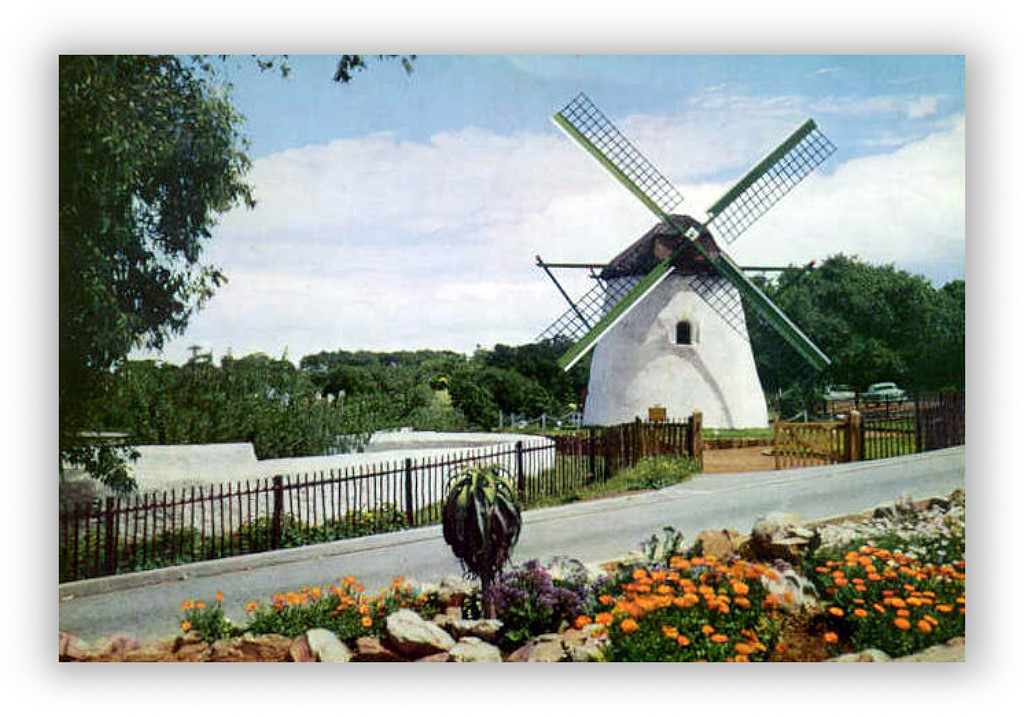
Where is the windmill?

Those who would have visited Cape Town's Southern Suburbs might have seen Moster's Windmill, the last working windmill from the colonial era (more than 200 years old). It was destroyed beyond recognition during the 2021 fire. 


It took many years to restore it. A few days back I was passing by and noted that it has been fully restored. What attracted my notice was the year written on it. 1796! Even after getting rebuilt almost 90%, the mill is still the same....from 1796. It reminded me of something I read in a novel by Terry Pratchett. 


"This, milord, is my family's axe. We have owned it for almost nine hundred years, see. Of course, sometimes it needed a new blade. And sometimes it has required a new handle, new designs on the metalwork, a little refreshing of the ornamentation . . . but is this not the nine hundred-year-old axe of my family? And because it has changed gently over time, it is still a pretty good axe, y'know. Pretty good."

By the same logic, the windmill is the same Mosetr's Mill from 1796. And it is still working because it has got a part here and a part there; a small refurbishment here and a major renovation there. Does this not beg the question, "what is Moster's Mill; or, for that matter, what is a windmill?"

As Monk Nagasena asks the Greek sovereign Milinda (in Milinda Panha), "Then, explain sir, what this "chariot" is. Is it the axle? Or the wheels, or the chassis, or reins, or yoke that is the chariot? Is it all of these combined, or is it something apart from them?" Milinda replied, "It is none of these things, venerable sir.". Then they discover, through dialogue, how names and forms are attributes of concepts that we build inside out mind. 

Similarly, Moster's Mill is a concept. It is not the mere summation of some physical parts. Changing a part here or there shall not change the concept. Because the concept is in our minds. Is that not true of humans as well? "Amit" is a concept. Some extra bones here and some less flesh there; some new thoughts here and some loss of biases there does not change the concept of "Amit". Once we see this ever constant nature of a concept amidst ever fleeting nature of physical attributes, it may give rise to fundamental changes in the way we view and interact with people, objects and events of the world.


Wednesday, October 18, 2023

Morality and Meditation

(Caution: Longer-than-usual blog!)

Talks of morality never appealed me. Maybe, I am a tiny bit of a rebel and do not want anyone or anything to rule what I do or do not. Maybe, its because I never believed in "free will". Because, I think that it is a logical universe controlled by cause and effect. If we start believing and expecting a universe to have effects without cause where would that lead us to? Maybe, it is partially because of the quotation by JD Krishnamurti which my father uses often, “virtues can never be practiced. The moment they are practised they are no more virtues!” This means that when you have to “practise” something, it implies that it does not come to you naturally. Hence, there is a conflict in yourself when you “practise” anything. How can one expect to end inner conflicts (and get inner peace) by modus operandi that inherently creates conflicts?


For the last few years, I have been practising mindfulness meditation and have been slowly but steadily trying to learn and appreciate Buddhist philosophy and psychology. There is one fundamental aspect of Buddhism which I was not very comfortable with. This is a set of paths prescribed by the Buddha to achieve the state of no sorrow or inner peace. 


Let us take one step back. Why did I like Buddhism? It is a strictly logical religion/system. I doubt if we can call it a religion. Because, unlike most religions Buddhism does not believe in any God(s)! It is a scientific religion based on axioms, experiments and observations. The foundation of Buddhism is laid in the four Noble Truths of Buddhism. These are pretty self-evident. I remember a conversation of HH Dalai Lama where the Lama was asked about the contradicting theological views on the origin of the universe. HH Dalai Lama playfully pointed out, does any of these negate any of the four Noble Truths? Then there is no issue in Buddhism whichever you believe in or not! The four Nobel Truths are that important. At its core, they are like the three axioms of Euclid. 

1- There is suffering in the world. 

2- There is a cause of this suffering and it is Tanhā or craving. 

3- It is possible to end suffering. 

4- The way to end suffering is by following the Noble Eightfold Path. 


As you may observe, there is nothing in this list that needs you to believe in anything. It’s an evidence based path. Point four is a set of action items. Nothing to believe in. You do those and see the results for yourself. 


Coming to my pain point now, in the Noble Eightfold path, there are three that are about ethical conducts. Things like not stealing, not lying, not harming others etc. I agree that these are good things to do. But, as a matter of principle, I could not fully embrace the prescriptive tone of these things. My understanding was that as and when my vision gets pure through meditation, I can see the harm of these kinds of actions and "wont be able to" perform any of these. The whole idea of sin and merit or Paapa and Punya never appealed me. 


Then came some insights. I was listening to a set of podcasts in a channel called Audio Dharma. It sparked an insight. The insight was based on the fact that the Buddha did not often use the word “sin”. He invented (like many other phrases) the use of the phrase “Kushal Karma” and “Akushal Karma”. Kushal loosely translates to skilful. So Kushal karma is skilful action and Akushal Karma is unskillful action! What does it mean? Skill usually implies efficiency. Hence, Kushal Karma will make you more efficient at …….achieving what you want to achieve, i.e. freedom from suffering. So, if you do Akushal Karma you may take much longer to achieve the state of freedom from suffering. One way to understand this is to think of performing Kushal Karma as going to psychological gym. With your big psychological muscles, you can remove the veil of “Sanskara” and see things clearly (the literal meaning of Vipassana). 

Doing Kushal Karma will make your meditation practice deeper and more effective. Your meditation practice, in turn, will make it more natural for you to see the bigger picture. Seeing the bigger picture will make it natural to perform Kushal karma. For example, if I have deep insight and kindness (through meditation), I can see clearly that eating meat is affecting the environment negatively which, in turn, will make the earth less habitable for me! Naturally, I will stop eating meat! 

It also made it clear why the Buddha called these the eight-fold path. It is not a sequence of actions. Rather it is a bouquet of actions! 


Sunday, October 01, 2023

Gandhi: An Idea Bigger than His Time!

We live in a world progressively getting inflicted with narrow-minded, reactionary rightwing thought process. I have even come across people from severely marginalised  backgrounds (like Africans, lesbians, Indians) who you would expect to be champions of liberalism, talking tones of fascism. It is, hence, expected that a personality like Mahatma Gandhi would face severe criticism and, at times, even hatred even in his own motherland. 

Let us discuss a little bit about the real contributions of this man whom Churchill jeered as the half-naked fakir! Of course, no one is perfect. The Mahatma also made mistakes in his life. However, the greatness of a person comes from their attitude towards their own mistakes. This is where the Mahatma takes the first prize! He has clearly mentioned that his life is an experiment and he may make mistakes. Hence, his views and convictions would change with time (which they did). 

Also, let us get some facts straight. First of all, it was the great poet Ravindranath Tagore who started calling Gandhi as the Mahatma. Secondly, it was the revolutionary and charismatic leader Netaji Subhas Bose who first called Gandhi as the father of the nation. Netaji and Gandhi differed severely in terms of their political stands. However, Gandhi admired Netaji immensely and addressed him as "the prince among patriots" and Netaji respected the Mahatma a lot.

Now let us come to his contributions. Before that some facts. India is one of the very few ex-colonies which has had a non-broken tradition of democracy. How is this possible in a nation which was never really a nation? Of course, the idea of nation-state is very new. Still, in the nations where the idea of nation started (like France, Spain and the UK) there has been a lot of separatist movements. How did India, a new nation, become a nation? A big credit goes to Gandhi. 

He made freedom struggle a mass movement. 

How? 

He made it very easy for anyone from any walk of life to be a freedom fighter. 

How? 

He redefined freedom fighter with a new word "satyagrahi"! This word literally means one who aspires to have a truthful and fair life and society. Colonialism was definitely not fair nor truthful. Hence, protests against it was a big duty of a satyagrahi. In addition, it was also a duty of a satyagrahi to have a righteous life, to not discriminate based on caste or money or religion or language. Do you notice the master stroke here? Most freedom struggles are about fighting the oppressor. It does not fix the society off the inflictions which made it weak enough to be controlled by oppressors. By redefining freedom struggle as "satyagrah", Gandhi made it a holistic movement. 

The second master stroke was about what is required from the satyagrahis. If you want every freedom fighter to go and fight and do big sacrifices then you can only mobilise a small part of the population. A satyagrahi was expected to do only a few things but on a daily basis. For example, they were expected to weave their own threads. It was a symbolic protests against the British empire. For the British empire, India was a huge market for cloths made in the UK. By making their own cloths a satyagrahi was hitting the empire where it actually hurts the most! Let us take a moment to appreciate this master stroke. Anyone can weave. Gandhi even innovated a handy small spinning wheel called box charkha! When you spend at least an hour to spin your own thread and wear cloths made from this you feel empowered! Everyone in the country felt empowered and connected. Gandhi's cotton threads literally connected a nation of hundred languages and a million Gods!

In addition to the above Gandhi was a fountainhead of ideas beyond his times; be it sarvodaya or trusteeship in capitalism. His ideas around sustainable development were far ahead of his times and are extremely useful in the current era

The more I try to read about him (from the writings of him and his compatriots) the more amazed I become about this fountainhead! Let us try not be swayed by propaganda and Whatsapp University. Let us try to pick up some original writings from that era and try to know some facts about this great soul. 


Thursday, September 14, 2023

A Perfect Moment

Terry Pratchett is one of the amazing writers of all times.  The wit and depth of his writings are unique. I was reading his book The Thief of Time over the last few weeks. Last few weeks were interesting for me mixed with some issues following which I was also doing mindfulness-meditation more regularly. I guess that might have made me a bit more receptive. I read Terry talking about a perfect moment. (I am adding the exact lines below.)

This made me think what is a perfect moment? Let us think about this dispassionately and logically. A perfect moment. The word "perfect", as per Cambridge dictionary, means "complete and correct in every way, of the best possible type or without fault.

What is correct? Opinions and dogmas are personal. They can not be universally correct. In other words universality should be a property of anything that is correct. Hence, laws of nature can be called correct. When I lift a stone and leave it there, it falls down. That is a perfect piece of action. We do not have to think why I lifted the stone or if after falling it hit an ant. Just the falling of a stone is perfect. It follows the laws of nature perfectly. 

Now let us think of the tiniest moment we can think of. Everything in that moment follows the laws of nature. Good or bad comes when we attach temporal, personal and spatial contexts. A moment in itself is always perfect.

Let us try to do this small mental exercise when we can. Try to note the time flowing. Try to note things changing. In this flow, try to focus on the tiniest piece of time you can focus on. That "Tick" which can become your personal quanta of time. Everything in that "Tick", follows the laws of nature. Everything in that "Tick" is perfect. 

Every "Tick" is a perfect moment.

And as Terry says in that novel, 

"Against one perfect moment, the centuries beat in vain".


Sunday, September 03, 2023

Human Mind: Amplifier of Dukha

Prologue: The presence of Dukha (loosely translated as suffering or sorrow) is the first fundamental truth discovered by Sakya Muni Buddha. We all have Dukha to various intensities. However, the human mind is very good at amplifying the real Dukha. Let us talk about two incidents witnessed by the writer in the recent days.

Incident 1: You might remember Dr Samuel from the last two blogs. Early in August he got infected with flu (or Covid or Bronchitis) while providing healthcare in one of the rural shelters housing internally displaced people in Myanmar. Almost at the same time he joined a mobile team of healthcare providers whose mission was to travel and cover as much ground as possible to provide badly needed healthcare in the remote parts of the nation where hospitals have stopped working due to the ongoing freedom struggle. It can be mentioned here that even before this war healthcare in the remote parts of Myanmar (more than 70 percent of the nation) was extremely bare-bone. 

Anyway, the result was that the doctor who himself is sick had to travel everyday to a new location to provide healthcare to people who are in much more acute need of healthcare. Everyday morning the cough and flu would ameliorate a bit and he would travel to the next destination. And by the evening, cough would get worse. He had no rest, no decent bed, no decent hut with proper walls. He had no choice to not travel. Because, if he stops working then they can not cover the ground. 

The story does not end here. When he had very bad cough, he got the news that his sister who was suffering from cancer had died. And many more issues and challenges which I will not go into details here. Lets just say that he has been going through one of the worst phases of his life, challenges and issues which most of us can not even begin to comprehend. And, all these to be in the right side of history. 

Incident 2: I met a young man in a birthday celebration. This young man did his masters in the Netherlands. Then, he was not able to get a job for some time and now he is back in India living with his parents. Of course, he is sad. I thought knowing about people worse off than him may make him count his blessings. Me and my cousin sister (whose daughter’s birthday it was) tried to tell him about Dr Samuel and the endless list of challenges he has been going through. It was surprising and shocking to see how little impression was made by Samuel's story on this gentleman. He thought his pain and sufferings are as bad or worse than those faced by Dr Samuel. 

Insight: Human brain is an amazing organ. We take whatever sorrow or issues we have and keep amplifying it till it fills each and every corner of our brain. It’s like lighting a candle in a mirror room. Multiple reflections make the whole room filled with the tiny light. Oscar Wilde once told, “I have faced many tragedies in my life. Some of them were real!”. 

I was fundamentally wrong in assuming that some sorrows or sufferings are less than others. Human mind makes sure that every sorrow and suffering fills in our whole mind. 


Animated picture of Dr Samuel providing healthcare in rural parts of Myanmar. This image was generated from a real photo using the AI app fotor.com .